This guide cuts through the noise. Whether you’re exploring your options for the first time or ready to take the next step, here you’ll find medically accurate, jargon-free information covering everything from implant types and surgical steps to costs, recovery, and realistic results.
What Is Breast Augmentation Surgery?
Breast augmentation surgery, also called augmentation mammoplasty is a cosmetic surgical procedure that increases the size, shape, or fullness of the breasts. It is one of the most commonly performed plastic surgery procedures worldwide and has a well-established safety record when performed by a board-certified surgeon.
You may also hear it referred to as a breast enlargement procedure, breast implant surgery, or silicone breast augmentation depending on the technique used. The goal is always the same: a natural-looking result that complements your body’s proportions.
Women who consider breast augmentation surgery typically include those who feel their breasts are too small relative to their frame, those who have experienced volume loss due to pregnancy or weight changes, and those seeking correction of noticeable asymmetry between the two breasts.
Why Do People Choose Breast Enlargement Surgery?
Motivations vary from person to person, and none are trivial. Common reasons include:
- Volume loss after pregnancy, breastfeeding, or significant weight loss
- Natural asymmetry – one breast noticeably larger or different in shape than the other
- Disproportionately small breasts relative to overall body frame
- Desire to restore a pre-pregnancy silhouette
- Improved confidence in clothing, swimwear, and intimate settings
- Reconstruction following mastectomy or breast injury
It is important to understand that breast enlargement surgery works best when the decision comes from a personal desire for change – not external pressure. The right candidate has realistic expectations and understands that surgery enhances appearance but does not change fundamental aspects of self-worth.
Types of Breast Augmentation: Which Is Right for You?
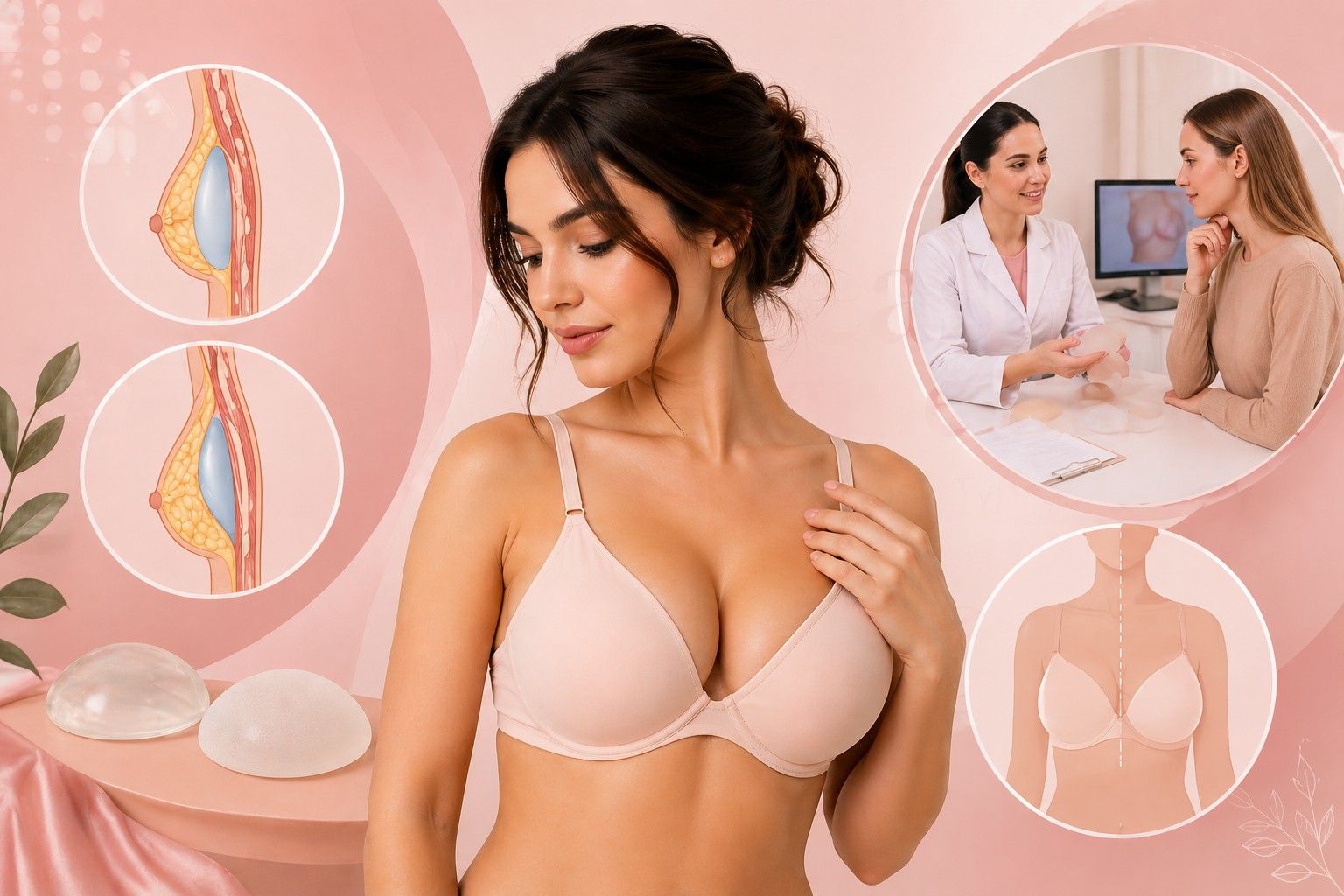
Breast augmentation types differ in material, feel, and surgical approach. Understanding the options is essential before making a decision.
Silicone Breast Implants
Silicone breast implants are filled with a cohesive silicone gel that closely mimics the feel of natural breast tissue. They are the most popular choice globally and are available in a wide range of sizes and profiles. Modern silicone implants – including the latest generation ‘gummy bear’ implants – are highly durable and maintain their shape even if the outer shell is compromised.
Saline Implants
Saline implants are filled with sterile salt water after placement. They tend to feel firmer than silicone and require a smaller incision. One advantage: if a saline implant ruptures, the body safely absorbs the solution, and the change in breast shape makes detection straightforward.
Fat Transfer Breast Augmentation
Fat transfer – also known as autologous fat grafting – uses liposuction to harvest fat from areas like the abdomen or thighs, which is then purified and injected into the breasts. This option is ideal for women seeking a modest, natural enhancement without an implant. It is not suitable for those desiring significant volume increases.
Comparison at a Glance
| Feature | Silicone Implants | Saline Implants | Fat Transfer |
| Feel | Very natural, soft | Firmer | Most natural |
| Incision Size | Slightly larger | Smaller | Minimal (liposuction) |
| Size Range | Wide | Wide | Limited (modest increase) |
Rupture Detection | MRI recommended | Visible deflation | Not applicable |
| Best For | Natural look & feel | Budget-conscious patients | Subtle, implant-free enhancement |
| Longevity | 10–20+ years | 10–20 years | Variable (some absorption) |
Implant Shapes, Sizes & Placement Options
Choosing the right implant involves more than picking a cup size. Your surgeon will evaluate your body measurements, skin elasticity, and desired outcome before recommending specific options.
- Round implants – The most commonly used shape; provide fullness in both the upper and lower breast pole. Versatile and suitable for most body types.
- Anatomical (teardrop) implants – Designed to mimic the natural breast slope, with more projection at the bottom. Often preferred for a subtle, natural result.
- Low, moderate, and high profile – Refers to how much the implant projects forward. A high-profile implant is narrower at the base with greater projection, while a low-profile implant is wider with less forward projection.
Regarding placement, implants can be positioned either above the pectoral muscle (subglandular) or beneath it (submuscular). Submuscular placement generally reduces the risk of capsular contracture and produces a more natural appearance, particularly in women with less natural breast tissue.
Step-by-Step Breast Augmentation Procedure
Every breast augmentation journey is unique, but the surgical process follows a consistent framework when performed by experienced plastic surgeons with proper training and accreditation.
The procedure steps are as follows:
- Consultation & Planning – Your surgeon assesses your anatomy, discusses implant options, and sets realistic expectations. 3D imaging may be used.
- Pre-Surgical Preparation – Blood tests, health screening, and instructions on medications, fasting, and what to avoid before surgery.
- Anesthesia Administration – General anesthesia is standard; you will be asleep and feel nothing during the procedure.
- Incision Placement – The surgeon makes a small incision in one of three locations: under the breast fold (inframammary), around the areola (periareolar), or in the armpit (transaxillary).
- Implant Placement – A pocket is created either above or below the pectoral muscle, and the implant is carefully positioned.
- Closure – The incisions are closed with layered sutures, and surgical tape or bandages are applied.
- Recovery Monitoring – You rest in a recovery area for 1–2 hours before discharge with post-op instructions.
The entire procedure typically takes 1 to 2 hours and is performed on an outpatient basis, meaning most patients return home the same day.
Benefits of Breast Augmentation Surgery
When performed by a qualified surgeon on an appropriate candidate, breast augmentation offers a range of meaningful benefits:
- Enhanced body proportions and improved clothing fit
- Correction of breast asymmetry for a more balanced appearance
- Restoration of breast volume lost due to aging, weight loss, or pregnancy
- Long-lasting results – implants typically last 10 to 20 years
- High patient satisfaction rates when expectations are realistic and well-managed
- Positive impact on self-confidence and body image in many patients
It is worth noting that results are highly individual. Your outcome depends on your anatomy, implant selection, surgical technique, and how closely you follow post-operative instructions.
Myth vs Reality: Common Misconceptions About Breast Implants
| Myth | Reality |
| Implants need to be replaced every 10 years | Modern implants can last 15–20+ years without replacement unless complications arise |
| You can’t breastfeed with implants | Most women can breastfeed normally; technique and placement matter |
| Results always look fake or unnatural | Proper sizing and placement produce very natural-looking outcomes |
| Recovery takes months | Most patients return to desk work within 1 week; full recovery is 4–6 weeks |
| Breast augmentation increases cancer risk | No scientific evidence supports this claim; regular mammograms remain recommended |
Cost of Breast Augmentation Surgery in India
Breast augmentation cost in India varies depending on several factors including the type of implant, the surgeon’s experience, the clinic’s location, and the extent of the procedure. To get an accurate estimate tailored to your specific needs, it’s advisable to consult a qualified plastic surgery doctor who can evaluate your anatomy and goals before quoting a price.
Typical Cost Ranges in India
| Procedure Type | Estimated Cost (INR) | Notes |
| Silicone breast implants | ₹1,20,000 – ₹2,50,000 | Most popular option; cost varies by implant brand |
| Saline implants | ₹90,000 – ₹1,80,000 | Generally lower cost than silicone |
| Fat transfer augmentation | ₹1,50,000 – ₹2,80,000 | Includes liposuction component |
| Revision surgery | ₹80,000 – ₹1,80,000 | For correcting previous augmentation |
Key Factors That Affect the Cost:
- Surgeon’s qualifications and years of experience
- Type and brand of implant selected
- Clinic location – metro cities typically cost more than tier-2 cities
- Hospital and anaesthesia fees
- Pre-operative tests and post-operative follow-up care
Never choose a surgeon based on price alone. In cosmetic surgery, underpriced procedures can carry greater risks related to implant quality, surgical environment, or surgeon experience.
Note: The cost mentioned here is only an average estimate based on online data. For the exact and complete cost, you need to contact Ambrosia Clinic.
Recovery Timeline After Breast Augmentation Surgery
Recovery from breast augmentation is generally well-tolerated. Most patients describe manageable discomfort rather than severe pain, especially with advanced post-surgery care and support from an experienced surgical team.
| Timeframe | What to Expect |
| Day 1–3 | Swelling, tightness, and mild-to-moderate soreness. Rest is essential. Drain tubes may be present. |
| Week 1 | Swelling begins to reduce. Most patients can manage light activity. Avoid lifting or straining. |
| Week 2–3 | Bruising fades; implants begin to settle. Upper body activity is still restricted. |
| Week 4–6 | Most patients return to normal daily activities including light exercise. |
| 3–6 Months | Implants fully settle into final position. Scars continue to fade. |
Important Recovery Tips:
- Sleep on your back with your upper body slightly elevated for the first 2–3 weeks
- Wear a surgical support bra as instructed – typically for 6 weeks
- Avoid driving for at least one week post-surgery or while on pain medication
- Keep incision sites clean and dry; follow your surgeon’s wound care instructions
- Avoid swimming, saunas, and submerging in water for at least 4–6 weeks
Risks & Safety Considerations
Breast augmentation is one of the safest surgical procedures available, but it is still surgery – and carries inherent risks. Being informed empowers better decision-making.
- Capsular contracture – scar tissue forming around the implant, causing firmness or discomfort
- Implant rupture or leakage – rare with modern implants; saline rupture is immediately detectable, silicone may require imaging
- Changes in nipple or breast sensation – temporary or, in rare cases, permanent
- Infection – uncommon when proper surgical protocols are followed
- Implant displacement or rippling – more common with saline implants in patients with little natural tissue
- Need for revision surgery – some patients require adjustments over the implant’s lifetime
Choosing a board-certified plastic surgeon operating in an accredited facility significantly reduces all of these risks. Always disclose your full medical history during consultation.
Before & After Results: What to Realistically Expect
Realistic expectations are the foundation of a satisfying result. Here is what the breast augmentation journey typically looks like:
- Immediately after surgery: Breasts appear swollen and sit higher than their final position
- At 6–8 weeks: Significant improvement in shape; most patients see something close to their final result
- At 3–6 months: Implants settle fully; scars lighten and become less visible
- Long-term: Natural-looking, proportionate results that complement the body’s shape
Surgeons with portfolio experience will often share before-and-after photographs of previous patients with similar body types. This gives you a realistic preview of what outcomes look like in practice – not just in theory.
Who Is the Right Candidate for Breast Augmentation Surgery?
Breast augmentation is suitable for a wide range of patients, but not everyone is an ideal candidate. You may be a good fit if you:
- Are in good general health with no uncontrolled medical conditions
- Are a non-smoker or willing to stop smoking well before surgery
- Have fully developed breasts (typically age 18+ for saline, 22+ for silicone per medical guidelines)
- Have realistic expectations about outcomes and understand the limitations of surgery
- Are motivated by your own desire for change – not pressure from a partner or external source
You may not be a suitable candidate if you are currently pregnant or breastfeeding, have active infections, or have a history of certain autoimmune conditions. Your surgeon will conduct a thorough assessment during consultation.
Breast Augmentation vs Other Breast Procedures
Breast augmentation is one of several breast plastic surgery options. Understanding how it differs from related procedures helps clarify whether it’s the right choice for your goals.
| Procedure | Primary Goal | Includes Implants? |
| Breast Augmentation | Increase size and/or improve shape | Yes (or fat transfer) |
| Breast Lift (Mastopexy) | Correct sagging and reposition nipple | No (unless combined) |
| Augmentation-Mastopexy | Increase size AND lift | Yes |
| Breast Reduction | Reduce size and weight of breasts | No |
| Breast Reconstruction | Rebuild breast after mastectomy | Yes (or flap technique) |
Many patients benefit from a combined procedure – for example, an augmentation-mastopexy – when both volume restoration and lifting are desired. Your surgeon can advise which combination best suits your anatomy.
Common Mistakes to Avoid When Planning Breast Augmentation

- Choosing a surgeon based solely on cost – credentials, experience, and facility standards matter most
- Going too large for your frame – oversized implants can cause back pain, stretch skin, and look disproportionate
- Ignoring recovery instructions – post-surgical care directly affects healing and long-term results
- Not disclosing your full medical history – certain medications, conditions, and habits affect surgical safety
- Expecting perfection – surgery improves appearance significantly, but no result is ever completely symmetrical or perfect
- Making a decision under emotional stress – take time to reflect, research, and consult multiple surgeons if needed
Do’s and Don’ts After Breast Augmentation Surgery
| Do | Don’t |
| Rest and give your body time to heal | Don’t smoke – nicotine impairs healing and increases complication risk |
| Wear your compression/support bra as advised | Don’t lift heavy objects for at least 4–6 weeks |
| Attend all follow-up appointments | Don’t submerge in water (swimming, baths) for 4–6 weeks |
| Eat a nutritious, protein-rich diet to support healing | Don’t engage in vigorous exercise before clearance from your surgeon |
| Report any unusual symptoms (fever, severe pain, sudden changes) immediately | Don’t apply pressure or sleep face-down during early recovery |
How Ambrosia Clinic Can Help You
If you’ve been researching breast augmentation and want guidance from a team that combines clinical expertise with personalised care, Ambrosia Clinic offers a patient-centred approach to cosmetic surgery procedures.
The team at Ambrosia includes board-certified surgeons with dedicated experience in breast plastic surgery. Consultations are designed to be thorough and unhurried – so you can ask every question, understand every option, and make a truly informed decision. Advanced 3D imaging technology is used to help patients visualise potential outcomes before making a commitment.
From pre-operative planning to post-surgical follow-up, the focus is on safety, natural-looking results, and long-term wellbeing – not volume of procedures. Every patient’s treatment plan is tailored to their unique anatomy, lifestyle, and goals.
Take the first step toward a confident, informed decision and book your consultation at Ambrosia Clinic to speak directly with a specialist who can answer your questions and guide you through every step of the process.
Frequently Asked Questions
Is breast augmentation surgery safe?
Yes – breast augmentation is among the most commonly performed and well-studied cosmetic procedures globally. When performed by a board-certified surgeon in an accredited facility on a suitable candidate, complication rates are low. Choosing a qualified surgeon and following pre- and post-operative guidance are the most important safety factors.
How long do breast implants last?
Most modern silicone and saline implants are designed to last 10 to 20 years or longer. They are not considered lifetime devices, and some patients choose replacement over time due to personal preferences or natural changes in breast tissue. Implants do not need to be replaced on a fixed schedule unless a complication arises.
Is breast augmentation painful?
Most patients describe post-operative discomfort as manageable – a tightness or soreness rather than sharp pain. Prescription pain relief is typically provided for the first few days, with over-the-counter options sufficient by the end of week one for most patients. Submuscular placement may involve slightly more initial discomfort than subglandular.
When can I return to work after breast augmentation?
Most patients with desk-based jobs return to work within 5 to 7 days. Those with physically demanding roles – involving lifting, straining, or overhead movements – typically need 4 to 6 weeks before returning. Always get clearance from your surgeon before resuming any strenuous activity.
What is the difference between silicone and saline implants?
Silicone implants are filled with cohesive gel and closely mimic the feel of natural tissue. Saline implants are filled with sterile salt water after placement, feel firmer, and offer the advantage of simpler rupture detection. Both are safe; the best choice depends on your body type, goals, and surgeon’s recommendation.
Will breast augmentation affect my ability to breastfeed?
In most cases, no. The majority of women with breast implants can breastfeed successfully. The impact depends largely on incision placement and whether any milk ducts were affected. Periareolar incisions carry a slightly higher (though still low) risk of affecting breastfeeding. Discuss this concern with your surgeon during consultation.
Will implants affect mammogram screening?
Implants can partially obscure breast tissue in standard mammograms. Inform your radiologist before screening – they will use additional imaging views (Eklund views) to ensure adequate tissue visibility. Regular mammograms remain an important part of breast health regardless of implant status.
How do I know which implant size is right for me?
Implant size is measured in cubic centimetres (cc), not cup size. Your surgeon will take precise measurements of your chest width, current breast tissue, and skin elasticity to recommend an appropriate range. Some clinics offer 3D imaging to help you visualise how different sizes will look on your specific frame.
Can breast augmentation be combined with other procedures?
Yes. Combining breast augmentation with a breast lift (augmentation-mastopexy) is one of the most commonly requested combination procedures – particularly for women who have experienced volume loss and sagging after pregnancy. Combining procedures is generally safe and can reduce total recovery time compared to two separate surgeries.
Final Thoughts
Breast augmentation surgery has helped millions of women feel more comfortable and confident in their bodies. It is not a decision to be made lightly, but it is also not one that needs to feel overwhelming. The key is access to honest, accurate information – and a surgeon you trust.
Whether you’re exploring silicone breast implants, considering a fat transfer, or simply trying to understand what the procedure involves, the most important next step is a personalised consultation. Every body is different, and your treatment plan should reflect your unique goals, anatomy, and lifestyle.
Clear information, qualified expertise, and realistic expectations are the foundation of a result you’ll be satisfied with – not just for a few months, but for years to come.