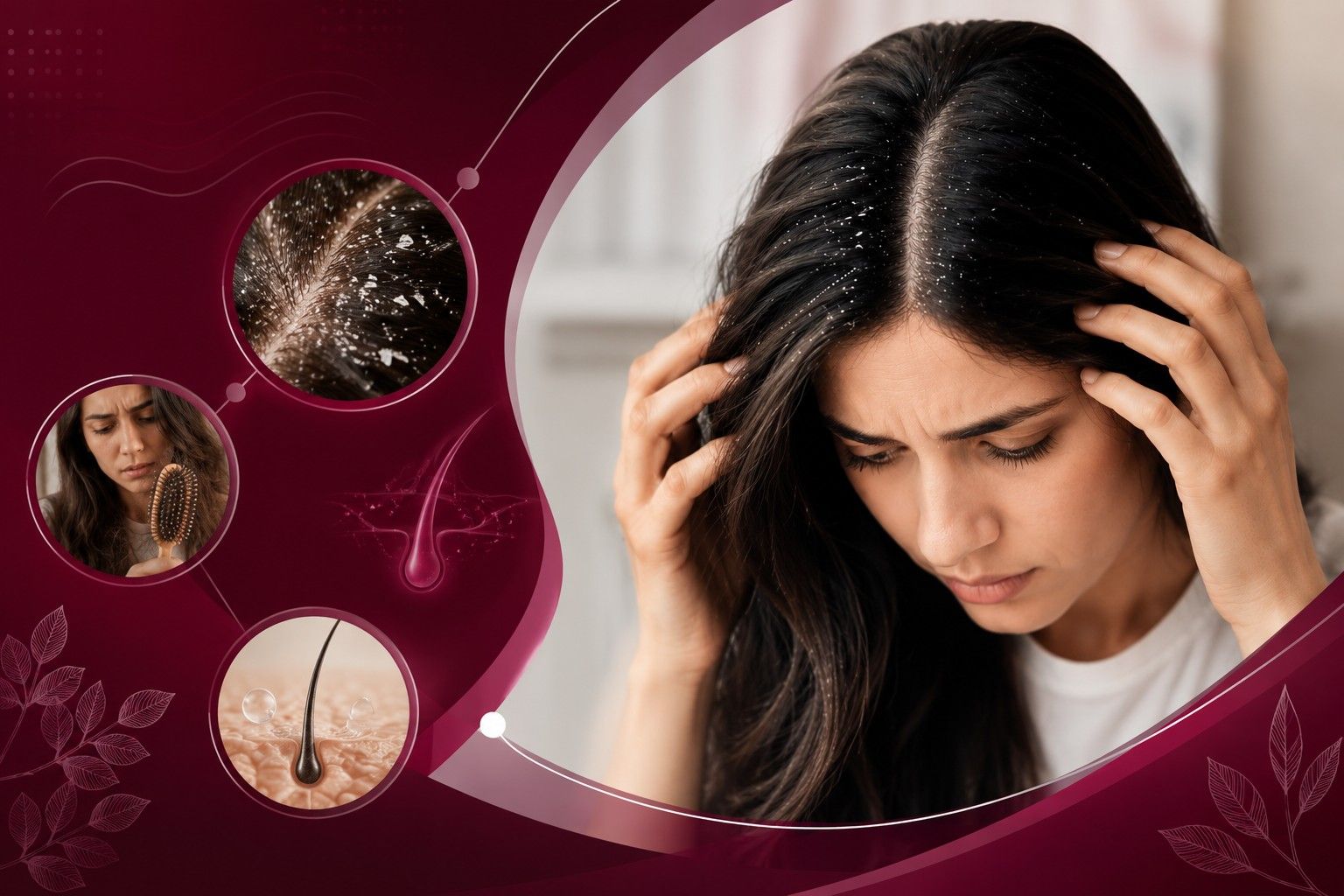
If you have been noticing white flakes on your shoulders and more hair than usual on your pillow, it is natural to connect the two. Most people assume dandruff is the reason their hair is falling out. It feels logical. Your scalp is itchy, irritated, and flaky, and your hair keeps shedding. So dandruff must be the culprit, right?
Not exactly.
The truth is a little more layered than that. Dandruff and hair fall often show up together, but that does not automatically mean one is causing the other. Understanding what is actually happening on your scalp can save you a lot of worry and help you get the right treatment faster.
Hair loss is one of the most common concerns we see at Ambrosia Clinic. And one of the most common questions our dermatologists hear is: Does dandruff cause hair fall? This article answers that clearly, with the science behind it and a straightforward breakdown of what you should actually be doing about it.
If you are already concerned about your hair loss, you can book a personalised hair and scalp assessment at Ambrosia Clinic in Hyderabad.
What Is Dandruff?
Dandruff is a scalp condition where the skin on your scalp sheds faster than normal. This produces visible white or yellowish flakes that fall onto your hair and shoulders. It is extremely common. Studies estimate that roughly 50% of the global population deals with dandruff at some point in their lives.
The main driver behind dandruff is a yeast called Malassezia. This fungus naturally lives on everyone’s scalp, but in some people it grows out of control. When it does, it triggers an inflammatory response, which speeds up the natural shedding of scalp skin cells. Those dead skin cells clump together with scalp oil and become the flakes you see.
Dandruff can also be triggered by:
– Excess sebum (oil) production on the scalp
– Dry scalp, especially during winter or in air-conditioned environments
– Sensitivity to certain hair products (contact dermatitis)
– Stress and hormonal changes
– Humidity and heat (very common in Indian cities)
– Irregular hair washing habits
It is not caused by poor hygiene alone, though going too long between washes can make it worse.
Does Dandruff Really Cause Hair Fall?
Here is the direct answer: dandruff does not directly cause hair fall. The flakes themselves are not pulling your hair out or destroying your follicles.
But dandruff can contribute to temporary hair shedding indirectly, and that distinction matters.
Here is how it works. When your scalp is inflamed and itchy from dandruff, most people scratch. That scratching physically damages the hair shafts and can disturb the hair follicles. Over time, this leads to breakage and increased shedding. On top of that, the inflammation from the Malassezia infection creates a hostile environment around the hair follicles, which can weaken the roots and push more hairs into the shedding phase earlier than they should be.
So the relationship looks like this: dandruff causes scalp inflammation, inflammation weakens follicles, scratching causes mechanical damage, and the result is more hair falling out than usual.
The key thing to understand is that this type of hair loss is almost always temporary. Once the dandruff is properly treated and the scalp inflammation settles down, hair shedding typically reduces within 4 to 8 weeks. Results may vary depending on the individual and whether other hair loss causes are also present.
The Link Between Scalp Inflammation and Hair Follicles
Your hair follicles are sensitive structures. They need a healthy scalp environment to function properly. When the scalp becomes chronically inflamed, a few things happen that are not good for your hair.
First, the inflammatory compounds released by your immune system in response to the Malassezia overgrowth can interfere with the normal hair growth cycle. They can push follicles out of the active growth phase (anagen) and into the resting and shedding phase (telogen) earlier than normal. This is sometimes referred to as telogen effluvium, and it results in more hairs falling out at the same time.
Second, the byproducts of Malassezia (specifically an unsaturated fatty acid called oleic acid) can directly disrupt the scalp skin barrier, causing further irritation and inflammation.
Third, if chronic dandruff progresses into a more severe condition called seborrheic dermatitis, the inflammation becomes more intense and longer lasting. At that stage, repeated cycles of inflammation can, over a long period of time, begin to affect follicle health more seriously.
Dandruff vs Seborrheic Dermatitis: What Is the Difference?
These two conditions are related but not the same, and it is worth knowing the difference because the treatment and the risk to your hair are different.
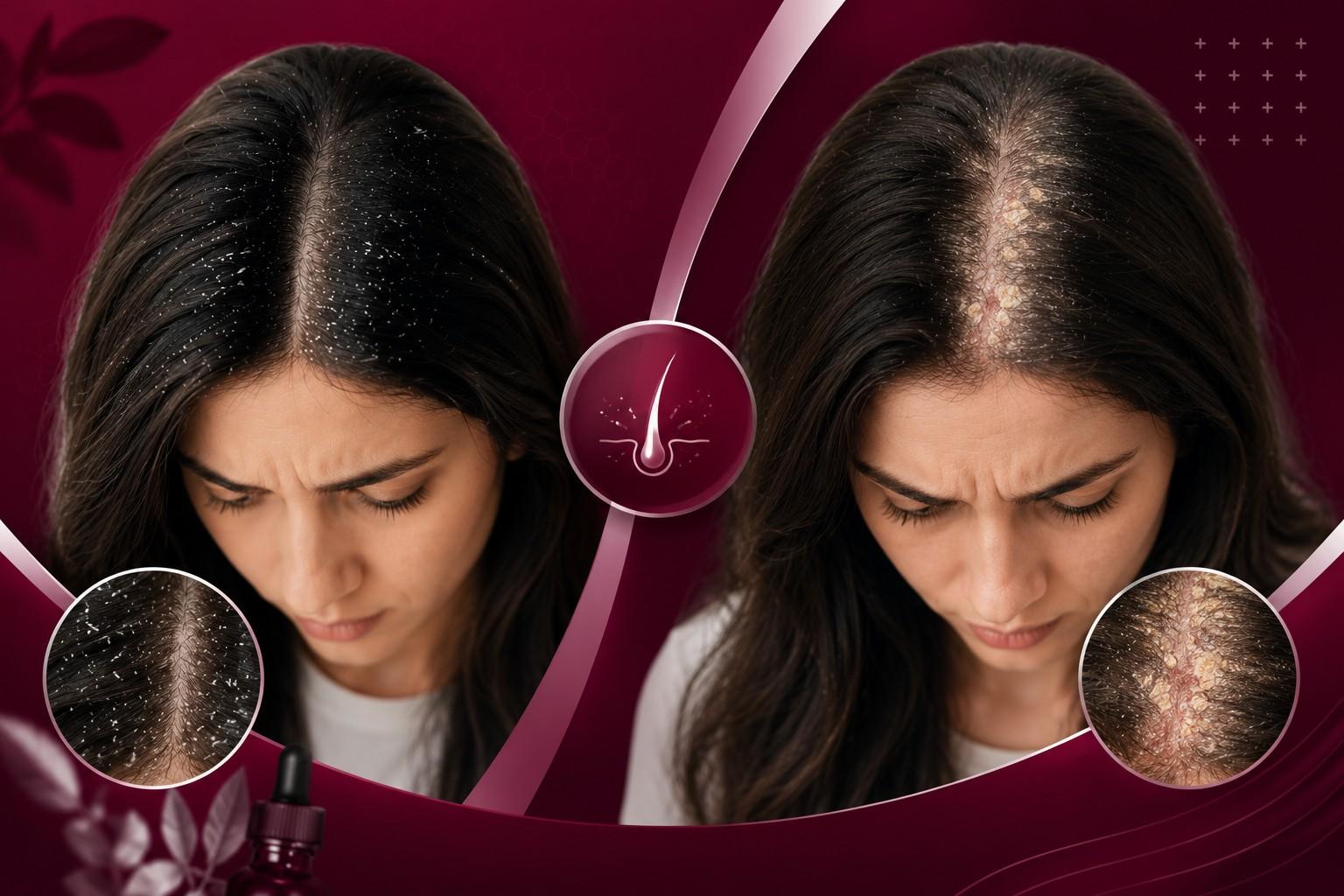
Dandruff:
– Fine, white, dry flakes
– Mild itching
– Limited to the scalp
– Manageable with over-the-counter antifungal shampoos
– Low risk of significant hair loss
Seborrheic Dermatitis:
– Thicker, yellowish, oily flakes or crusting
– More intense itching and redness
– Can spread to the face, behind the ears, and the chest
– Usually needs prescription-strength treatment
– Higher risk of contributing to hair thinning if left untreated for a long time
If your dandruff looks more like thick, greasy patches and is not responding to regular anti-dandruff shampoo after 4 to 6 weeks, it is worth seeing a dermatologist. It may have progressed to seborrheic dermatitis.
Can Dandruff Cause Permanent Hair Loss?
This is the question that worries most people, and the reassuring answer is: very rarely.
Dandruff-related hair loss is almost always temporary. Once the scalp condition is treated, the follicles recover, and hair growth resumes. The hair you lose during a dandruff episode is not permanently gone in most cases.
Permanent hair loss from dandruff is possible only in extreme situations where severe, untreated scalp inflammation goes on for years and causes lasting damage to the follicles. This is not common.
There is one important exception. If you have androgenetic alopecia (genetic hair loss caused by DHT sensitivity) alongside dandruff, the scalp inflammation can accelerate the rate at which genetically susceptible follicles shrink. In that case, what looks like dandruff-related hair fall may actually be genetic hair loss that the dandruff is making worse. A dermatologist can distinguish between these two through a proper scalp examination.
Other Hair Loss Causes You Should Know About
Dandruff may be contributing to your hair shedding, but it is rarely the whole story. Hair loss causes in India are often multifactorial, meaning several things are happening at once. Here are the most common ones.
Androgenetic Alopecia (Genetic Hair Loss)
This is the most common cause of progressive hair thinning in both men and women. In men, it usually starts at the temples or crown. In women, it typically causes diffuse thinning across the top of the scalp. It is driven by DHT, a hormone that causes genetically sensitive follicles to shrink over time. It does not resolve on its own and generally worsens without treatment.
Telogen Effluvium
This is stress-related hair shedding. When the body goes through a significant stressor, such as illness, surgery, crash dieting, pregnancy, or emotional stress, a large number of follicles can simultaneously shift into the resting and shedding phase. The shedding usually becomes noticeable 2 to 3 months after the triggering event. The good news is that telogen effluvium is typically reversible once the trigger is addressed.
Nutritional Deficiencies
This is extremely common in India, particularly among women. Low iron and ferritin levels are one of the most frequent causes of diffuse hair thinning that gets overlooked. Vitamin D deficiency, vitamin B12 deficiency, and low zinc are also commonly associated with hair loss. A simple blood test can identify these.
Hormonal Imbalances
PCOS is one of the most common hormonal causes of hair thinning in Indian women. Thyroid disorders, both hypothyroidism and hyperthyroidism, are also strongly linked to hair loss. Changes related to pregnancy, postpartum recovery, and menopause can all trigger significant shedding.
Scalp Infections
Beyond dandruff and seborrheic dermatitis, other fungal infections like tinea capitis can cause hair loss in patches. These require specific antifungal treatment.
Traction Alopecia
This is hair loss caused by persistent tension on the hair roots from tight hairstyles. It is common in Indian women to frequently wear tight braids, ponytails, or buns. Over time, it can cause permanent thinning along the hairline if the style is not changed.
Hair Thinning Causes in Men and Women
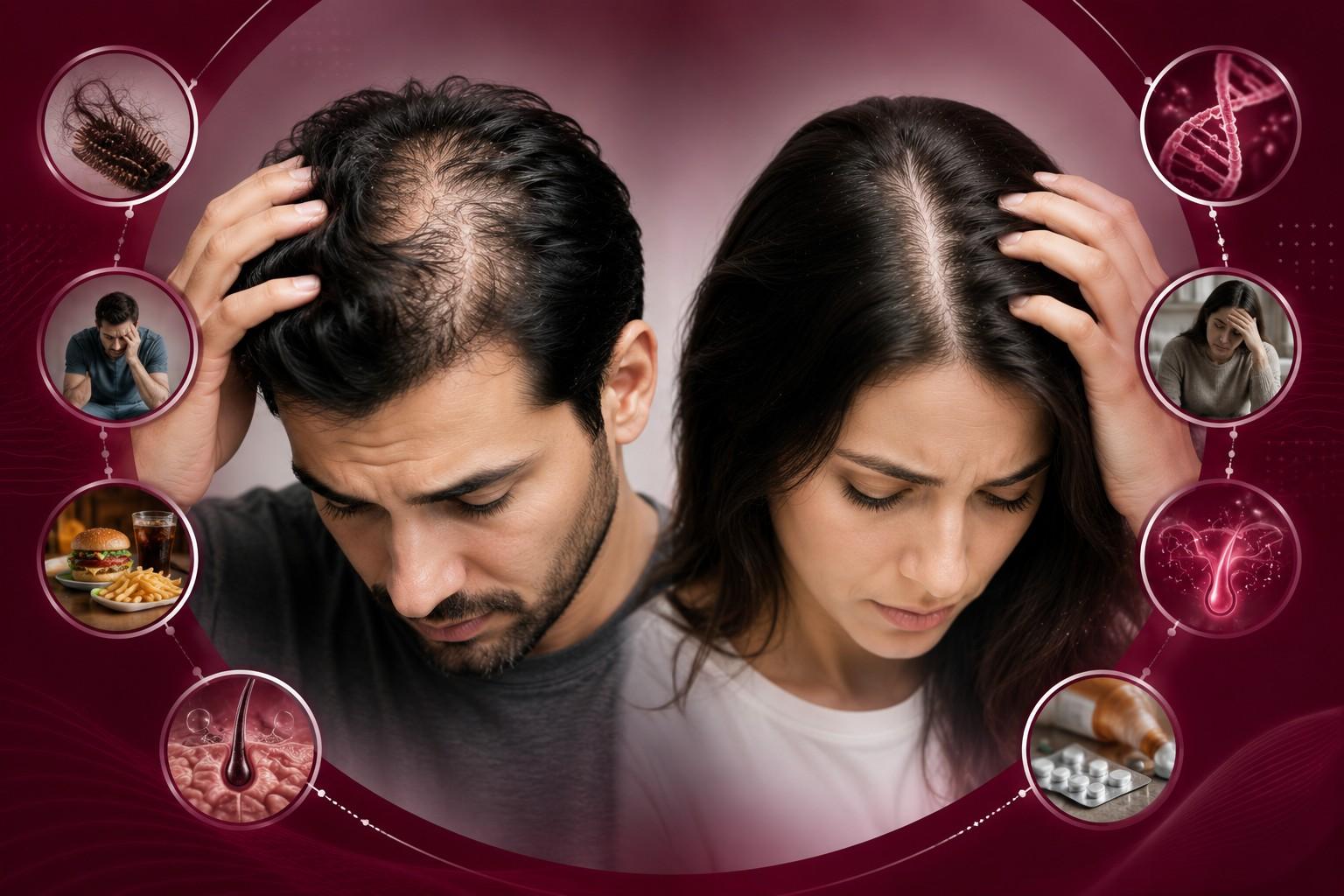
Men and women tend to experience hair thinning differently, and the causes can also differ.
In men, the most common cause is genetic hair loss starting at the temples and crown. Scalp conditions like dandruff and seborrheic dermatitis also affect men more frequently.
In women, the causes are more varied. Hormonal factors, including PCOS, thyroid dysfunction, postpartum shedding, and menopause, play a much bigger role. Nutritional deficiencies, particularly iron deficiency, are also very commonly found in Indian women experiencing hair thinning. Women tend to experience more diffuse thinning rather than patchy or receding patterns.
Both men and women can experience telogen effluvium from stress, illness, or diet, and both can develop androgenetic alopecia.
Understanding the Hair Growth Cycle
To understand why dandruff and inflammation affect hair fall, it helps to know a little about how hair grows.
Each hair follicle goes through a cycle with four phases:
Anagen (active growth): This is the main growth phase, which lasts between 2 and 7 years depending on genetics. Around 85 to 90% of your scalp hair is in this phase at any given time.
Catagen (transition): A short phase of about 2 to 3 weeks, where the follicle begins to shrink and detach from its blood supply.
Telogen (resting): The follicle rests for about 3 to 4 months. Around 10 to 15% of hair is in this phase normally. This is the phase hairs are shed.
Exogen (shedding): The hair physically falls out, and the cycle restarts.
Losing 50 to 100 hairs per day is considered normal because those hairs are completing their telogen cycle. The problem starts when inflammation or stress pushes a larger than normal number of follicles into the telogen phase simultaneously, resulting in noticeably heavier shedding.
Hair Fall Myths vs Facts
There is a lot of misinformation around hair loss. Here are some of the most common myths and what dermatologists actually say.
Myth: Dandruff causes baldness.
Fact: Dandruff may contribute to temporary shedding through scalp inflammation, but it does not cause permanent baldness on its own.
Myth: Washing your hair every day causes hair fall.
Fact: Regular cleansing supports a healthy scalp. Hairs shed during washing were already in the telogen phase. Washing does not cause the loss; it just makes it visible.
Myth: Oil massages can cure hair loss.
Fact: Scalp massage can improve blood circulation and is relaxing. But oil massage does not reverse genetic hair loss or treat hormonal or nutritional causes. It is a supportive habit, not a cure.
Myth: Anti-dandruff shampoos make hair fall worse.
Fact: Medically formulated anti-dandruff shampoos are safe for regular use. In fact, treating dandruff reduces scalp inflammation and can help reduce shedding.
Myth: Hair transplant results last forever, no matter what.
Fact: Transplanted hairs from the donor area are typically permanent because those follicles are not sensitive to DHT. But the surrounding natural hair may continue to thin without ongoing medical treatment, which is why a comprehensive plan matters.
Myth: Hair loss stops on its own if you wait long enough.
Fact: Telogen effluvium usually resolves on its own once the trigger is removed. But genetic hair loss, hormonal imbalances, and nutritional deficiencies generally require treatment.
When Should You See a Dermatologist for Hair Loss?
Many people wait too long before seeking help, often because they assume the problem will sort itself out. Here is when a dermatologist consultation is genuinely recommended.
– Dandruff that has not improved after 4 to 6 weeks of using an appropriate antifungal shampoo
– Hair shedding that is increasing or has not stabilised after several weeks
– Any of the red flag signs listed above
– Before starting hair loss treatments, you have seen online or purchased over the counter
– If hair fall is causing significant stress or affecting your day-to-day confidence
A dermatologist can determine the actual cause of your hair loss through a proper examination, trichoscopy, and targeted blood tests. Getting a diagnosis first means your treatment will be far more effective.
How Hair Loss Is Diagnosed
A proper hair loss diagnosis at a clinic like Ambrosia typically involves several steps.
Medical and family history review: Understanding when the loss started, any recent stressors, medication changes, dietary habits, and family history of hair loss.
Trichoscopy or dermatoscopy: A non-invasive examination of the scalp using a specialised magnifying device. This gives a detailed view of the scalp skin, follicles, and hair shaft characteristics.
Hair pull test: A simple test to measure how easily hair is pulled from the scalp, which indicates whether active shedding is occurring.
Blood tests: These are often essential. Commonly tested markers include full blood count, ferritin, thyroid function (TSH), vitamin D, vitamin B12, zinc, and androgen levels where relevant.
Scalp biopsy: Reserved for cases where the cause is unclear, and other methods have not given a definitive answer.
This combination of assessments allows for an accurate diagnosis and a personalised treatment plan.
Best Hair Treatments for Hair Loss and Hair Fall
Hair treatment depends entirely on the cause. There is no one-size-fits-all approach to hair loss, and individual outcomes will vary based on the underlying diagnosis, severity, age, genetics, and how consistently treatment is followed.
Treating Dandruff and Scalp Conditions:
– Antifungal shampoos containing ketoconazole (1 to 2%), zinc pyrithione, or selenium sulphide are the standard first-line option
– Used 2 to 3 times per week, improvements in scalp condition are typically seen within 2 to 4 weeks
– Prescription-strength formulations or topical steroids may be needed for seborrheic dermatitis
Non-Surgical Medical Treatments for Hair Loss:
– Topical Minoxidil: An FDA-approved treatment that prolongs the anagen phase and stimulates follicle activity. Available in 2% and 5% concentrations. Results are generally visible after 4 to 6 months of consistent use. Stopping treatment typically causes the shedding to return.
– Oral medications (Finasteride, Dutasteride): DHT-blocking medications for men with androgenetic alopecia. Require a dermatologist’s prescription. Not suitable for women of childbearing age.
– PRP (Platelet-Rich Plasma) therapy: A patient’s own blood is processed to concentrate growth factors, which are then injected into the scalp to stimulate follicle activity. A course of 3 to 6 sessions is commonly recommended.
– GFC (Growth Factor Concentrate): A more refined version of PRP used at Ambrosia Clinic that delivers a higher concentration of growth factors. Results may vary by individual.
– Mesotherapy: Microinjections of vitamins, minerals, and hair growth factors into the scalp. Typically done in monthly sessions.
– Low-Level Laser Therapy: Adjunct therapy that supports scalp circulation and follicle health. Often used alongside other treatments.
Surgical Option: Hair Transplant
FUE (Follicular Unit Extraction) is the current gold standard for surgical hair restoration. Individual follicular units are extracted from the donor area (usually the back of the scalp) and transplanted into areas of thinning or baldness.
Important points about hair transplant:
– It is a permanent solution for the transplanted hairs because they are taken from DHT-resistant areas of the scalp
– Full results are typically visible between 12 and 18 months after the procedure
– It is not the right option for dandruff-related or telogen effluvium hair loss, which are temporary conditions
– A qualified surgeon should always assess candidacy through a proper consultation
– Ongoing medical treatment may still be needed to maintain the surrounding non-transplanted hair
You can learn more about FUE hair transplant at Ambrosia Clinic here: https://www.ambrosiaclinic.com/fue-hair-transplant-hyderabad/
Lifestyle Factors That Worsen Hair Fall
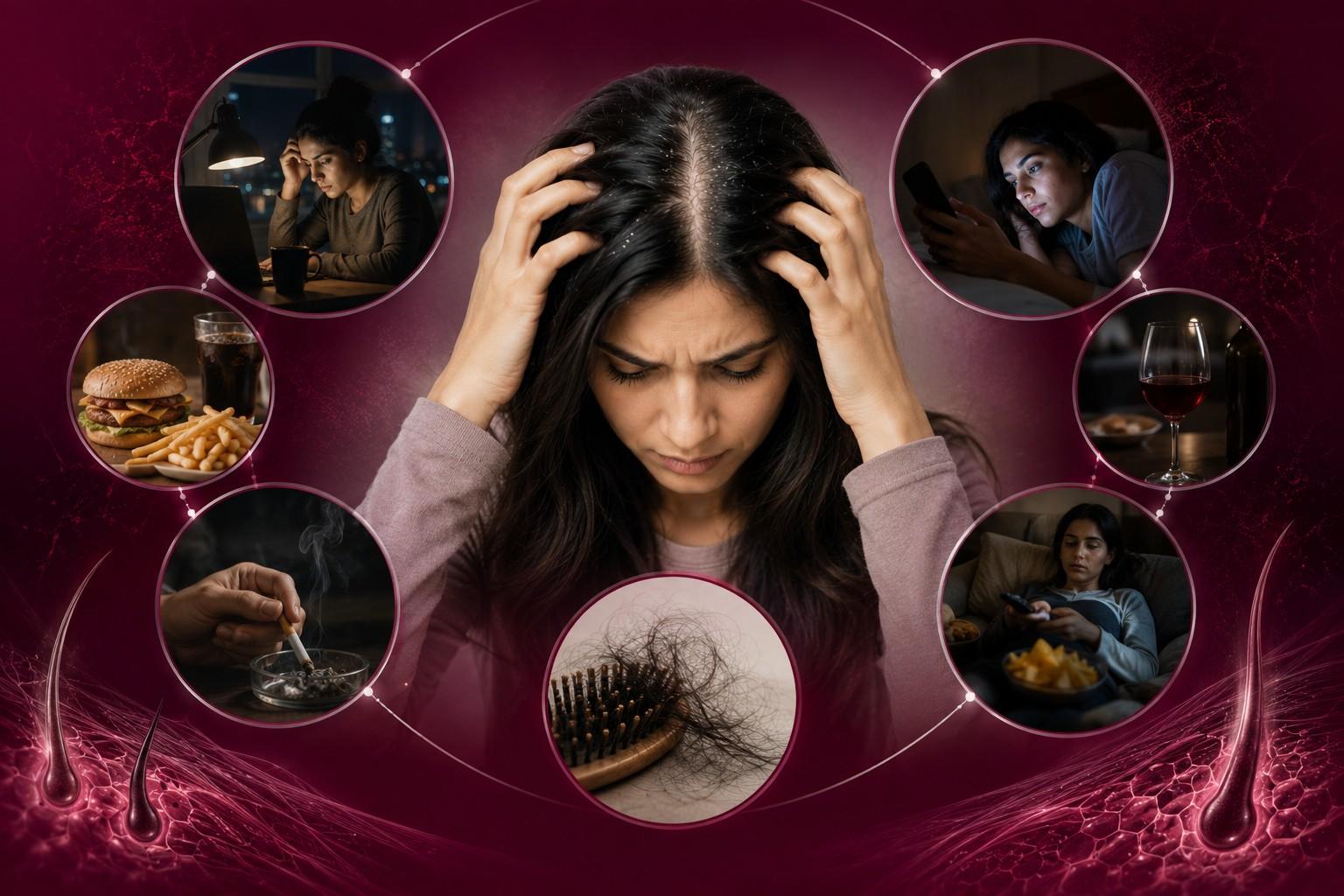
Beyond the medical causes, several everyday habits and factors are known to worsen hair shedding. These are particularly relevant in an Indian context.
Chronic stress: Elevated cortisol levels from long-term stress are one of the most common triggers of telogen effluvium. Managing stress through exercise, sleep, and, where needed, professional support, can make a real difference to hair health.
Poor nutrition: A diet low in iron, protein, and key vitamins is very common in India and directly impacts hair growth. Including iron-rich foods, adequate protein, nuts, seeds, and leafy greens supports hair follicle health.
Crash dieting: Rapid caloric restriction causes the body to divert nutrients away from hair (which it considers non-essential) to vital organs. This triggers significant shedding.
Heat styling and chemical treatments: Frequent use of hair dryers, flat irons, bleach, and harsh dyes damages the hair shaft and can affect scalp health over time.
Hard water: Hyderabad and many other Indian cities have hard water with high mineral content. The calcium and magnesium deposits can build up on the scalp and hair shaft, making hair more brittle and the scalp more prone to irritation.
Pollution: Research increasingly suggests that urban air pollution and particulate matter can negatively affect scalp health and hair follicle function.
Poor sleep: Growth hormone is released during deep sleep and plays a role in cell repair and hair growth. Chronic sleep deprivation can interfere with normal hair cycling.
What Results Can You Expect? Realistic Timelines
This is something many people want to know before starting treatment, and it is important to have realistic expectations. Treatment timelines vary significantly depending on what is being treated and the individual’s response.
Anti-dandruff shampoo: Reduced flaking in 2 to 4 weeks. Scalp improvement in 6 to 8 weeks. Ongoing use is needed to maintain results.
Topical Minoxidil: Initial shedding can increase slightly in the first few weeks (this is normal). Visible reduction in shedding by 3 to 4 months. Visible regrowth by 6 to 12 months. Must be continued indefinitely.
PRP or GFC therapy: Reduction in shedding after 3 to 6 weeks. Visible regrowth improvement over 6 to 12 months, depending on severity. Maintenance sessions every 3 to 6 months.
Mesotherapy: Results visible within 4 to 6 months of consistent monthly sessions.
FUE Hair Transplant: Initial transplanted hairs shed within the first few weeks (normal). New growth begins around 3 to 4 months. Full results visible between 12 and 18 months.
Nutritional correction: Depending on the severity of the deficiency, significant improvement in hair shedding can be seen within 3 to 6 months of targeted supplementation and dietary changes.
Remember, hair grows slowly. Even effective treatments take time to show visible results. Patience and consistency are genuinely important.
How Ambrosia Clinic Can Help With Hair Loss and Scalp Health
At Ambrosia Clinic in Hyderabad, hair loss evaluation and treatment are one of our core areas of expertise. With over 22 years of experience and led by Dr. Priti Shukla, a board-certified plastic surgeon and hair transplant specialist, our team takes a thorough, personalised approach to every case.
We do not believe in a one-size-fits-all solution for hair loss. The right treatment depends on an accurate diagnosis first. That is why our process starts with a proper clinical evaluation, including trichoscopy and, where needed, targeted blood tests to identify the underlying cause.
Our treatment options include:
– Medical management: Topical and oral treatments for androgenetic alopecia and telogen effluvium
– PRP and GFC therapy for hair restoration
– Mesotherapy for scalp health and hair strengthening
– Scalp treatment and care protocols for dandruff and seborrheic dermatitis
– FUE hair transplant surgery for eligible candidates
We also offer guidance on nutrition, scalp care, and lifestyle factors that support long-term hair health.
If you are concerned about hair fall, scalp health, or dandruff that is not improving, we encourage you to book a consultation with our dermatology team.
Medical Disclaimer
This content is intended for educational purposes only and should not replace professional medical advice, diagnosis, or treatment. Hair loss and scalp conditions can have multiple underlying causes that require clinical evaluation. Individuals experiencing persistent hair loss, scalp conditions, or sudden changes in hair density should consult a qualified dermatologist or healthcare professional for proper assessment and personalised treatment guidance.
Last Words
Dandruff does not directly cause hair fall, but it can contribute to temporary shedding through scalp inflammation and mechanical damage from scratching. The good news is that dandruff-related hair loss is almost always reversible once the scalp condition is properly treated.
That said, hair loss causes are rarely simple. If your shedding is significant or not improving, there is likely more going on beneath the surface. Whether it is genetic, hormonal, nutritional, or related to stress, getting an accurate diagnosis is the most important first step.
Treating symptoms without understanding the cause often leads to wasted time and money. A proper evaluation by a dermatologist gives you the clarity to choose the right treatment and set realistic expectations for recovery.
If you are dealing with hair fall alongside dandruff, or if your scalp has simply not been feeling healthy, speak to the team at Ambrosia Clinic. We are here to help you understand what is happening and what will actually work for your specific situation.
Frequently Asked Questions
Q: Does dandruff directly cause hair fall?
A: Dandruff does not directly cause hair fall, but it can contribute to temporary shedding through scalp inflammation and scratching. Once dandruff is treated effectively, most people see reduced shedding within 4 to 8 weeks. Results may vary. If shedding continues, a dermatologist evaluation is recommended to check for other underlying hair loss causes.
Q: Can dandruff cause permanent hair loss?
A: Dandruff-related hair loss is almost always temporary and reversible with proper scalp treatment. Permanent loss from dandruff alone is uncommon. However, if severe scalp inflammation from conditions like seborrheic dermatitis goes untreated for a prolonged period, it may contribute to lasting follicle damage in some cases. A dermatologist can assess the severity.
Q: How do I stop hair fall due to dandruff?
A: Use an antifungal shampoo with ketoconazole (1 to 2%) or zinc pyrithione two to three times per week. Avoid scratching the scalp. Keep up a balanced diet with adequate iron, zinc, and vitamins. If shedding continues after 6 to 8 weeks of consistent treatment, consult a dermatologist for a proper diagnosis and treatment plan.
Q: What are the main causes of hair loss in India?
A: Common hair loss causes in India include androgenetic alopecia (genetic pattern hair loss), telogen effluvium from stress or illness, iron and ferritin deficiency (especially in women), PCOS, thyroid disorders, vitamin D and B12 deficiency, scalp infections, and pollution-related scalp damage. A dermatologist can identify the specific underlying cause through examination and blood tests.
Q: Is a hair transplant needed for dandruff-related hair loss?
A: Hair transplant is not typically needed for dandruff or scalp inflammation-related hair loss, which is generally temporary and responds well to medical treatment. Hair transplant is usually considered for permanent hair loss, such as advanced androgenetic alopecia, where non-surgical options have not been sufficient. Candidacy should always be determined through a professional consultation.
Q: What is the difference between dandruff and seborrheic dermatitis?
A: Dandruff presents as fine white dry flakes with mild itching and is manageable with over-the-counter antifungal shampoos. Seborrheic dermatitis involves thicker, yellowish oily flakes, more intense inflammation, and can spread beyond the scalp. It typically requires prescription treatment and carries a higher risk of contributing to hair thinning if untreated.
Q: When should I see a dermatologist for hair loss?
A: See a dermatologist if hair fall persists beyond 6 weeks, if you notice visible thinning or patchy loss, if dandruff does not respond to OTC treatment after 4 to 6 weeks, if you have any red flag symptoms, or if hair loss is affecting your quality of life. Early diagnosis leads to better treatment outcomes.
Q: What nutritional deficiencies cause hair fall?
A: Iron and ferritin deficiency is the most common nutritional cause of hair thinning in Indian women. Vitamin D, vitamin B12, and zinc deficiencies are also frequently associated with diffuse hair shedding. A blood test can identify specific deficiencies and guide appropriate supplementation.
Q: Can treating dandruff help with hair regrowth?
A: Treating dandruff can reduce scalp inflammation and the associated hair shedding. In many cases hair density gradually improves once the scalp condition resolves. However, treating dandruff will not reverse hair loss caused by genetics, hormonal imbalances, or nutritional deficiencies. Those require separate targeted treatment.
Q: How long does it take for hair to regrow after dandruff-related loss?
A: Shedding typically reduces within 4 to 8 weeks of effective dandruff treatment. Visible regrowth in areas of temporary thinning may be seen within 3 to 6 months. Individual outcomes vary based on age, overall health, how long the scalp inflammation has been present, and whether other contributing hair loss causes are also being addressed.