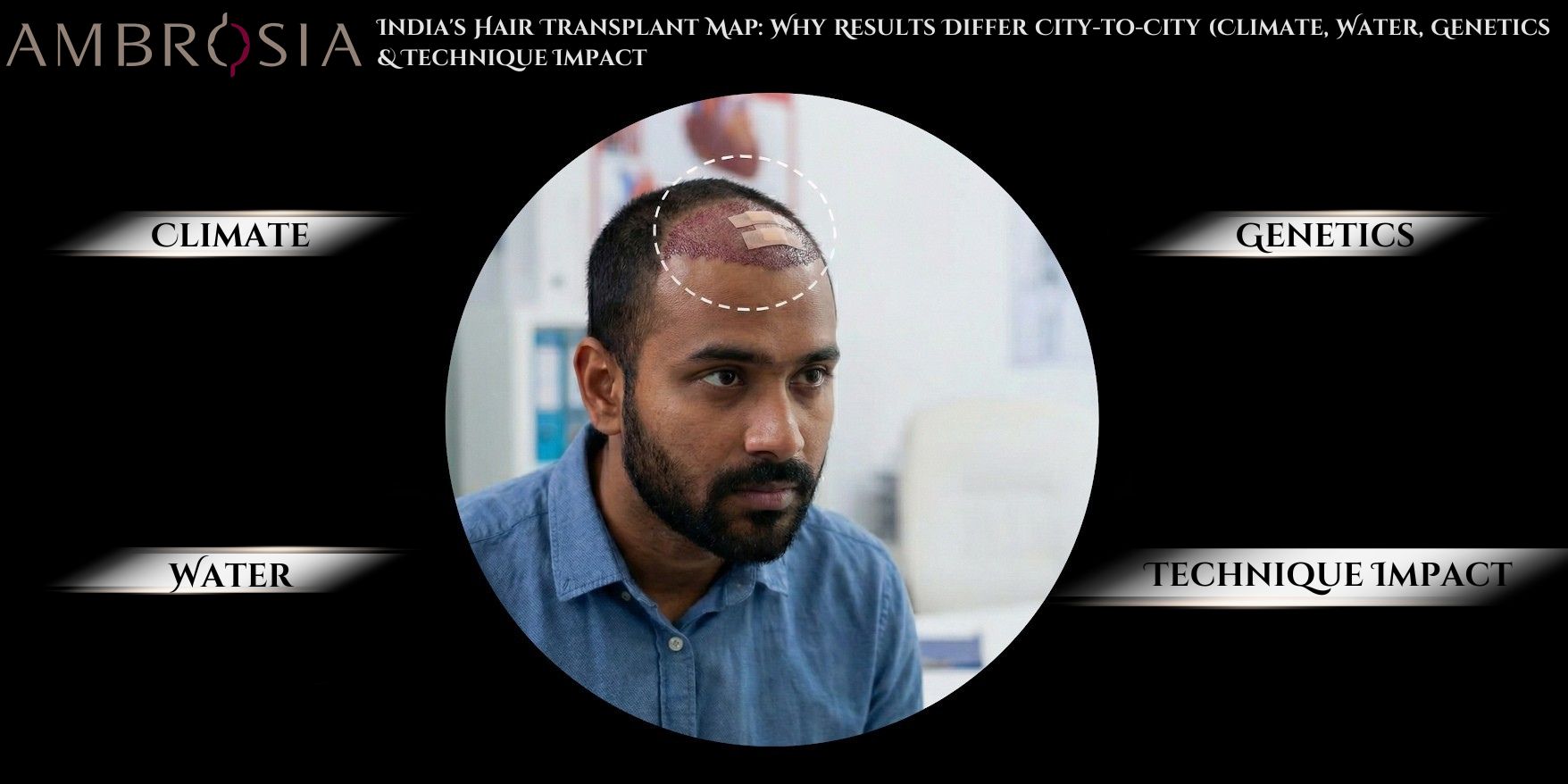
When patients walk into my clinic in Hyderabad, one question surfaces repeatedly: “Doctor, my friend had a hair transplant in Delhi, and the results look different from what I’ve seen here. Why does this happen?”
After performing thousands of hair transplant procedures across different Indian cities and treating patients who’ve travelled from every corner of the country, I’ve observed clear patterns. Your hair transplant success isn’t just about the surgeon’s skill or the technique used. Where you undergo the procedure and where you recover significantly impacts your final outcome.
India has become a global destination for hair restoration, offering world-class expertise at accessible prices. But the quality remains inconsistent. Understanding the environmental, genetic, and technical factors that affect results will help you make an informed decision about your hair transplant journey.
India’s Hair Transplant Map – City-by-City Factors
Delhi / NCR
The capital region faces extreme weather fluctuations that create unique challenges for hair transplant recovery:
- Scorching summers push temperatures above 45°C, making post-operative scalp care difficult during critical healing weeks
- Excessive sweating during the first two weeks increases infection risk and affects graft survival rates
- Notorious air pollution deposits particulate matter on healing scalp tissue, requiring stringent hygiene protocols
- Hard water in many NCR areas contains high mineral content that irritates freshly transplanted follicles
- Winter months offer better recovery conditions, though dry, cold air requires careful moisturisation to prevent scalp dryness and crusting
Image created by Gemini
Mumbai
Mumbai’s coastal climate presents both advantages and challenges for hair restoration:
- Consistent humidity benefits healing scalp tissue by preventing excessive dryness
- Year-round moisture creates breeding grounds for fungal infections if post-operative care isn’t meticulous
- Pollution levels in central and suburban areas require patients to protect their scalp during healing
- Salt-laden sea air can irritate sensitive post-surgical skin
- Warm temperatures throughout the year mean there’s no “ideal season” for surgery, requiring constant attention to sweating management
Image created by Gemini
Hyderabad
Hyderabad offers a balanced environment for hair transplant procedures and recovery:
- Moderate temperatures for most of the year create comfortable healing conditions
- Less extreme summers compared to Delhi or Chennai reduce sweating-related complications
- Strong medical infrastructure with experienced cosmetic surgeons who understand local patient needs
- Treated water access in most upscale localities where clinics operate supports proper post-operative care
- Competitive medical environment has improved overall quality while maintaining reasonable costs compared to metros like Mumbai

Image created by Gemini
Role of Climate & Water Quality
Climate directly impacts your hair transplant healing process in ways most patients don’t anticipate.
Heat and Sweating
When your scalp sweats excessively during the first two weeks after surgery, several problems arise:
- Salt and bacteria accumulate around transplanted follicles, increasing infection risk
- Inflammation damages delicate grafts during their most vulnerable period
- Patients in cities exceeding 40°C must stay in air-conditioned environments during initial recovery
- Procedures performed in cooler months show 15-20% better graft survival compared to peak summer surgeries
Humidity Levels
The moisture in your environment plays a crucial role in healing:
- Moderate humidity helps maintain scalp moisture and prevents excessive scabbing
- Too much humidity creates conditions for fungal growth, particularly in coastal cities
- Coastal locations often require antifungal prophylaxis more frequently than inland areas
- Balanced humidity supports optimal healing without encouraging infections
Pollution and Scalp Health
Airborne particulates create hidden dangers for recovering patients:
- Pollution settles on healing scalp, potentially causing irritation and infection
- Cities with severe air quality issues require protective head coverings during recovery
- Specialised scalp cleansers become necessary in high-pollution environments
- Long-term exposure affects both transplanted and existing hair health
Water Quality Impact
Hard water containing high calcium and magnesium levels creates ongoing challenges:
- Mineral deposits accumulate on hair shafts and scalp over time
- Buildup weakens existing hair and affects the texture of transplanted hair
- Water softeners or filtered shower heads protect both transplanted and existing hair long-term
- This simple intervention makes significant difference in areas with documented hard water problems
Hyderabad’s comparatively moderate climate creates fewer environmental obstacles to successful recovery. Patients here can usually follow standard post-operative protocols without extreme modifications for weather or water quality.
Donor Area Considerations
Indian patients often face limitations that affect achievable outcomes:
- Genetics commonly give people too few hair follicles in the back of the scalp to support hair transplant surgery
- Cannot always achieve ultra-dense results shown in some international before-after photos
- Overharvesting leads to visible scarring and exhausted reserves for future procedures
- Ethical surgeons carefully calculate maximum safe extraction to preserve donor zone
- Realistic expectations must account for actual available donor hair
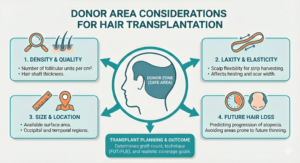
Image created by Gemini
Crown vs Frontal Restoration
The crown area requires significantly more grafts than the frontal hairline to achieve satisfactory density. Given donor limitations, I often recommend prioritising the frontal region where results make the most visible impact on appearance.
Strategic planning determines where to invest limited donor resources:
- Patients with aggressive hair loss patterns need realistic conversations about achievable results
- Marketing materials often show results not medically possible for many Indian patients
- Balancing aesthetic goals with donor availability requires experienced surgical judgment
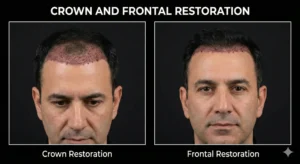
Image created by Gemini
Technique Matters More Than City
The surgeon’s experience and technique selection ultimately determine your results more than your location.
FUE Hair Transplant (Follicular Unit Extraction)
This technique involves extracting individual follicular units directly from the donor area using tiny punches.
This popular technique offers specific advantages and requires particular expertise:
- Involves extracting individual follicular units directly from donor area using tiny punches
- Leaves minimal scarring, allowing patients to wear short hairstyles confidently
- Faster recovery compared to strip methods
- Requires exceptional surgical skill to avoid high graft damage during extraction
- Time-intensive procedure that some clinics rush, compromising results
- Some facilities use undertrained technicians instead of doctors for actual extraction
- Best suited for patients wanting shorter hairstyles or smaller graft numbers
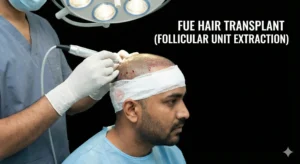
Image created by Gemini
FUT Hair Transplant (Follicular Unit Transplantation)
This traditional approach remains highly effective when performed expertly:
- Involves removing a strip of scalp from donor area, then dissecting into individual grafts under microscopes
- Typically yields more viable grafts with less damage compared to FUE when done properly
- Can harvest more grafts in single session, making it suitable for advanced baldness
- Leaves a linear scar in donor area that remains concealed with longer hair
- Requires skilled closure technique to minimise scarring
- Ideal for patients needing high graft numbers who wear longer hairstyles
- Often more cost-effective for large sessions
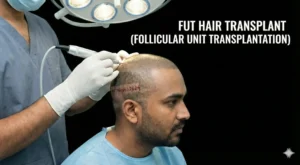
Image created by Gemini
DHI Hair Transplant (Direct Hair Implantation)
This specialised technique uses advanced tools for precise placement:
- Uses pen-like tool to implant grafts directly without creating recipient sites first
- Offers precise control over angle and depth of each graft
- Potentially creates more natural results with proper execution
- Steep learning curve means inexperienced hands can damage grafts or create unnatural patterns
- Marketing often exaggerates DHI advantages over well-performed FUE
- Higher cost typically associated with this technique
- Best reserved for surgeons with extensive DHI-specific training
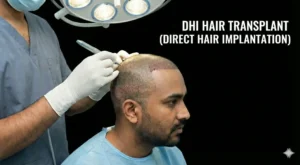
Image created by Gemini
What Really Matters
Graft handling determines survival rates more than technique choice. Each extracted follicle must remain hydrated and at proper temperature. The time between extraction and implantation should be minimised.
Density planning requires artistic vision combined with medical knowledge. Placing grafts too close together can compromise blood supply and kill all follicles. Spacing them too far apart creates an unnatural, sparse appearance.
Angle and direction design separates natural-looking results from obvious transplants. Hair doesn’t grow straight up—it emerges at specific angles that vary across different scalp regions. Experienced surgeons replicate these natural patterns meticulously.
A skilled plastic surgeon performing FUT will achieve superior results compared to an inexperienced technician using the latest DHI equipment. Focus on the surgeon’s credentials, experience, and actual patient results rather than the marketed technique name.
Frequently Asked Questions
Q1. Which city is best for hair transplant in India?
Ans. Hyderabad offers the most balanced conditions for hair transplant success, with moderate climate year-round, less extreme summers than Delhi or Chennai, strong medical infrastructure, and competitive pricing. At Ambrosia Clinic Hyderabad, our controlled environment and experienced surgeons ensure optimal recovery conditions regardless of season.
Q2. Which hair transplant method is best : FUE or FUT?
Ans. FUE (Follicular Unit Extraction) is best for minimal scarring and faster recovery, while FUT offers maximum grafts. Ambrosia Clinic Hyderabad specializes in both techniques, helping you choose the ideal method based on your hair loss severity and lifestyle needs.
Q3. How long does hair transplant take to show results?
Ans. Hair transplant results become visible in 3-4 months with full growth by 12-18 months. At Ambrosia Clinic Hyderabad, our expert team provides complete aftercare guidance and regular follow-ups to ensure optimal growth and patient satisfaction throughout your journey.
Q4. Does hair transplant look natural after surgery?
Ans. Yes, modern hair transplants look completely natural when performed by skilled surgeons.
Q5. What is the success rate of hair transplant in India?
Ans. Success rates vary by surgeon expertise, not city. Properly performed procedures show 90-95% graft survival when environmental factors are controlled. However, inexperienced hands using advanced DHI equipment produce worse results than skilled surgeons using traditional FUT. Focus on surgeon credentials, actual patient results, and graft handling protocols rather than clinic marketing claims.
Q6. When is the best time for hair transplant surgery in India?
Ans. Cooler months (October-February) show 15-20% better graft survival compared to peak summer. Avoid extreme heat above 40°C which causes excessive sweating and infection risk during critical two-week healing period. However, in Hyderabad’s moderate climate, procedures can be performed year-round with proper precautions. Ambrosia Clinic’s controlled post-operative environment ensures optimal conditions regardless of season.